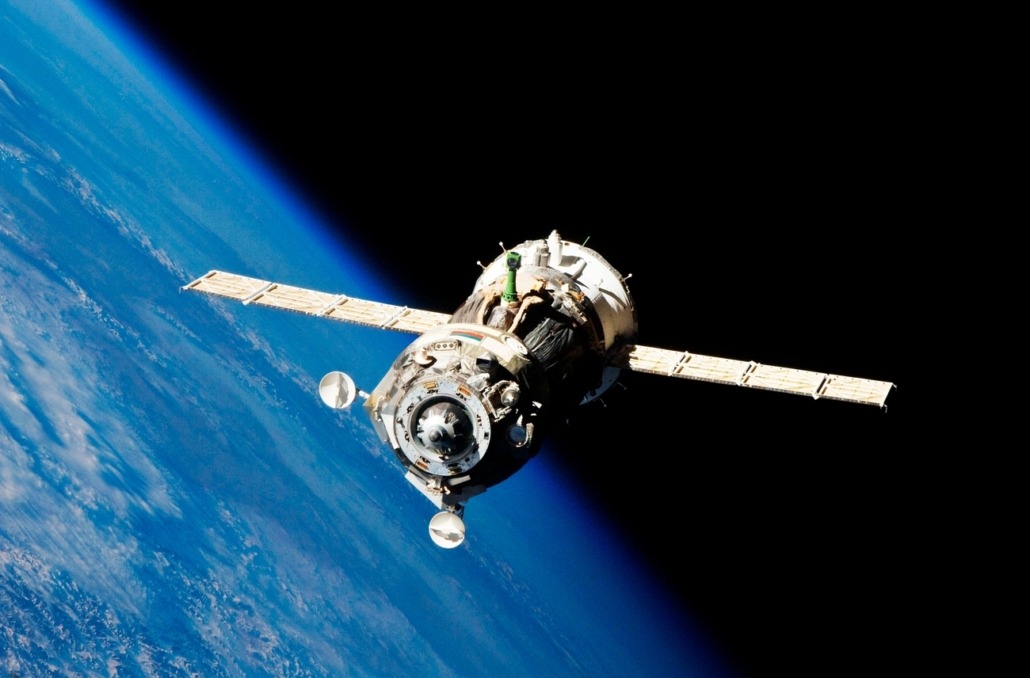
US Short Of Space Engineers Compared To China: Your Briefing
A new RAND study warns the United States lacks the skilled workers to replace satellites destroyed in a war, a gap that could cripple the military in a fight with China.
Modern war runs on satellites for navigation, targeting, and communication, and an enemy will try to shoot them down. If America cannot rebuild what it loses fast enough, it loses the war that depends on them. Where do things stand?
By the numbers
Space barely registers in the engineering workforce. The RAND report, Breaking Glass, Missing Hands, released August 31, found that space work supports only about 3% of US engineers, roughly 7,000 of some 208,000 annual engineering openings.
The technician gap is worse. The space industrial base needs about 30,000 technicians a year but credentials only around 11,000, a shortfall of nearly three to one, with the gap for specialized assemblers wider still.
Talent is leaning foreign. About 70% of recent US doctorates in electrical and computer engineering went to foreign nationals, a dependency that becomes a vulnerability when the work requires a security clearance.
The one that matters most
- Rebuilding is measured in years, not months. A satellite normally takes about a decade to design and field, but a war would demand replacements in 12 to 24 months, and the study concludes the workforce simply is not there to do it. America can build the satellite; it may not be able to train the people who build the satellite in time.
- The specialists cannot be rushed. Experts in fields like radiation-hardening take 15 or more years to develop, so a shortage discovered during a war cannot be fixed during that war.
- The clearance system is its own bottleneck. Even a willing, qualified engineer waits roughly six months for a security clearance before touching classified space work, a delay that turns a manpower problem into a months-long lag exactly when speed would matter most.
The backstory
Space Force commissioned it. The study was ordered by the vice chief of space operations and modeled a conflict window of 2027 to 2032, the years military planners increasingly circle for a possible clash with China over Taiwan.
Threat framing is real but separate. Coverage tied the findings to Chinese and Russian anti-satellite advances, and that threat is genuine, though the report itself is about the American workforce, not the enemy’s arsenal. The point is not that China is getting stronger in space; it is that America may not be able to recover from the first punch.
In their own words
Lead author Alexandra Gerber cast the fix in wartime terms: “Think like World War II, Rosie the Riveter, everybody’s on the line.” The report urges the Space Force to invest now in STEM pipelines, technician training, and automation to build surge capacity before a war, not during one.
What’s in it for Americans
This is a deterrence problem, not just a labor one. An adversary that believes it can knock out American satellites faster than the United States can replace them has every incentive to try. A visible ability to reconstitute is itself a deterrent.
The fix is cheap next to the risk. The study’s recommended investment in training runs in the millions, against a space war that would cost trillions and could be lost for want of the workers to rebuild. A country that spends fortunes on satellites and neglects the people who make them has bought a fleet it cannot repair.
-The Editors
National Security · Upstream of the Swamp · September 9, 2026